Research, briefing
More agents help parallel work—and can hurt sequential reasoning
A 180-configuration study finds centralized multi-agent systems can improve parallel financial analysis by about 81%, while all tested multi-agent variants degrade sequential PlanCraft tasks by 39–70%.
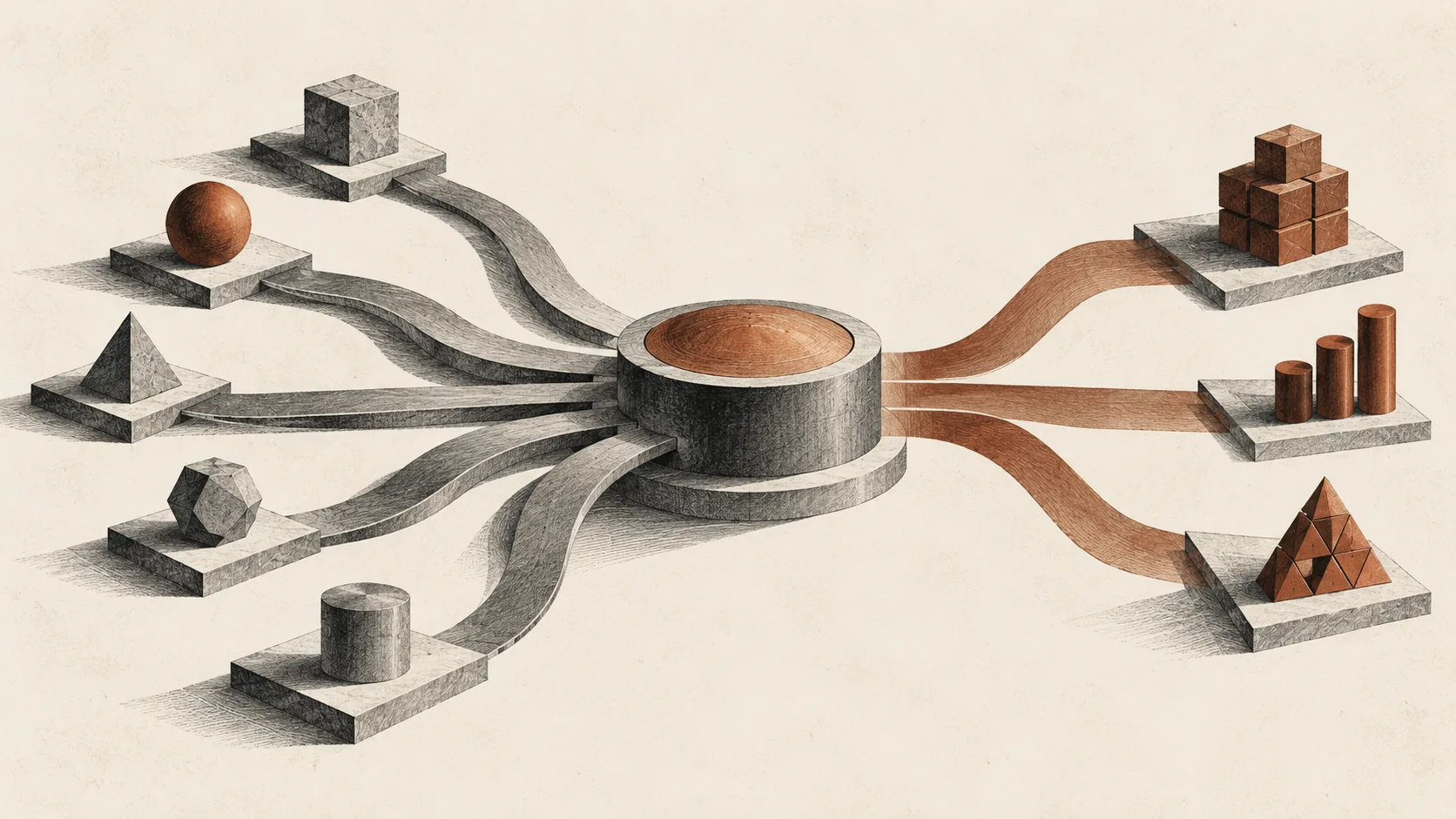
“Use more agents” is not a general optimization.
Researchers evaluated 180 agent configurations across multiple architectures and model families. On parallelizable financial-analysis tasks, centralized coordination improved performance by roughly 81% over the single-agent baseline. But on PlanCraft, which rewards strict sequential reasoning, every tested multi-agent architecture performed worse, with relative declines of 39–70%.
The study also found large differences in error propagation: independent agents amplified errors far more aggressively than centralized systems with an orchestrator acting as a validation bottleneck.
Why it matters
The useful design rule is not “single agent versus multi-agent.” It is match coordination topology to task structure.
Parallel research, independent evidence gathering, and decomposable analysis can benefit from multiple workers. Short sequential workflows often cannot: delegation consumes context, tokens, and coordination budget without creating real parallelism.
Before adding subagents, measure decomposability and coordination overhead. Architecture should be an empirical choice, not a vibe.
VERIFICATION
Sources
- Evidence
- strong
- Signal
- high
- Difficulty
- advanced